Tour around Spain
In September / October 2026, “El sueño de Nirina” will arrive in Spain, where it can be seen in Madrid, Granada, and Valencia.
PHASE 2, THE TOUR
In August 2025, El sueño de Nirina will tour four cities on the island over a five-week period, in a logistical operation without precedent.
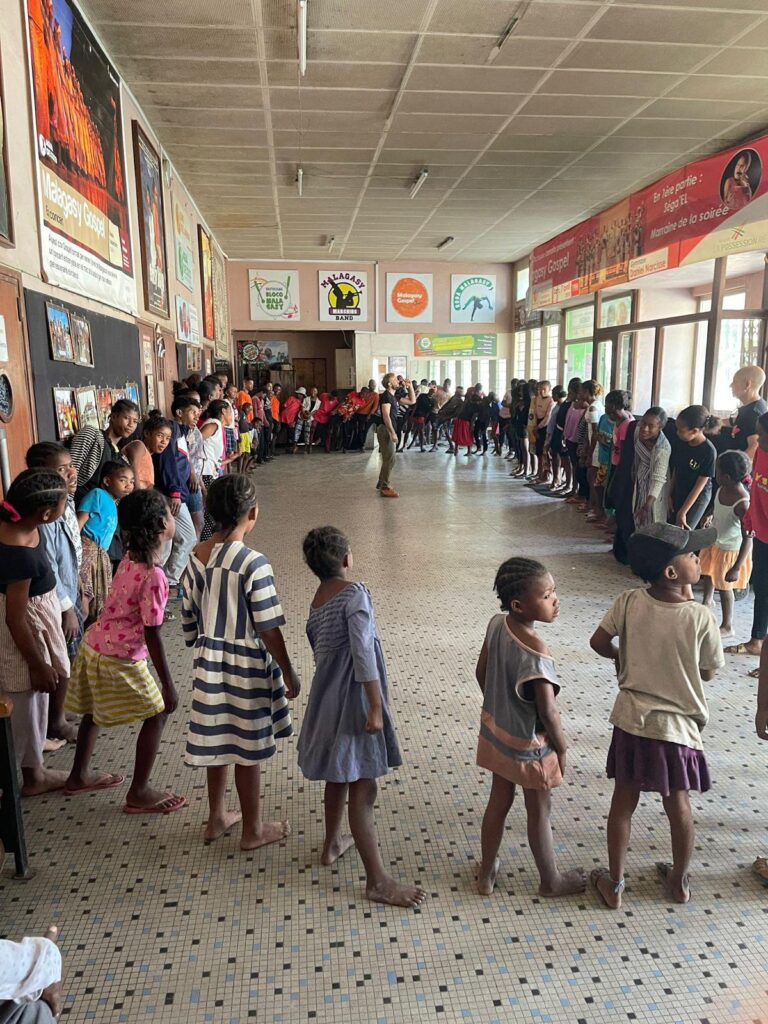
More than 120 people on tour.
Among them, 90 artists, 25 volunteers, one doctor, two cooks, and various technicians embarked on an expedition as ambitious as it was beautiful.
8 vans, 2,000 km, 72 hours on the road.
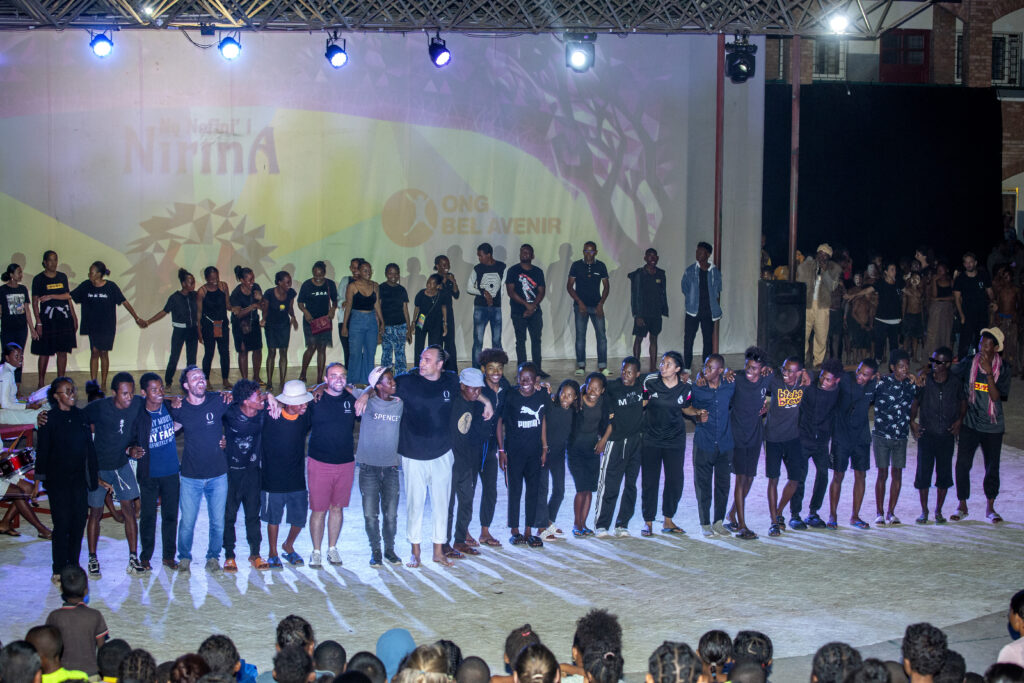
From Toliara to Antananarivo, passing through Antisarebé and Fianarantsoa, we transformed 4 venues into true theaters to share 7 unforgettable performances.
More than 8,000 people attended for free,
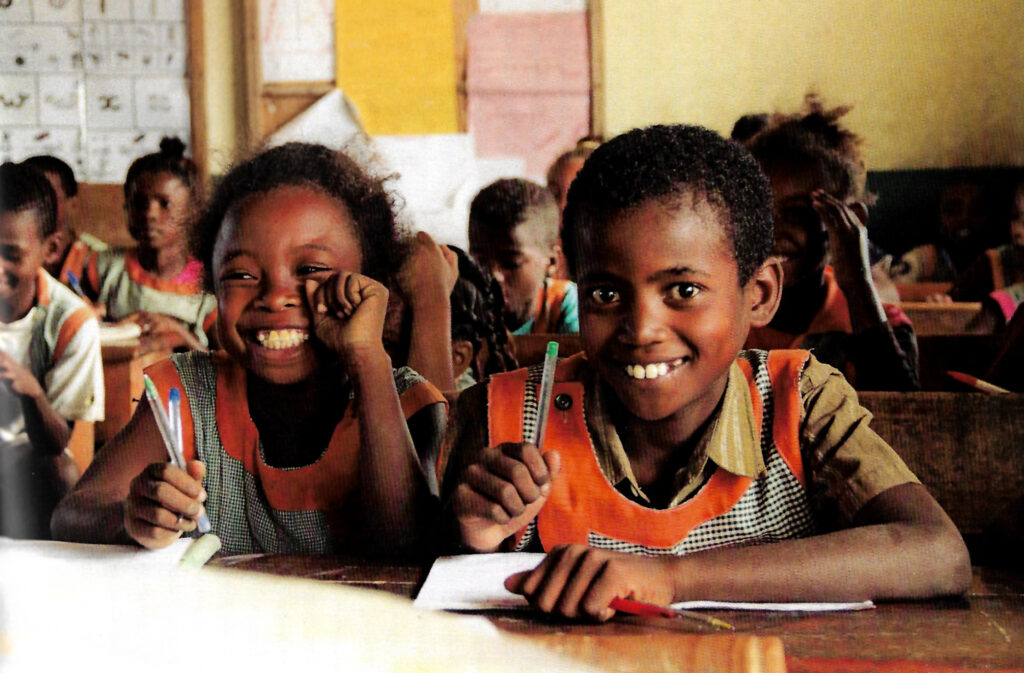
most of them children who, for the first time, experienced the transformative power of opera.

PHASE 1 – Fall 2023/Summer 2024 – Completed –
CREATION, PRODUCTION, AND PREMIERE OF “EL SUEÑO DE NIRINA”
1. The first opera in Malagasy: “Ny Nofin’i Nirina” (“El sueño de Nirina”)
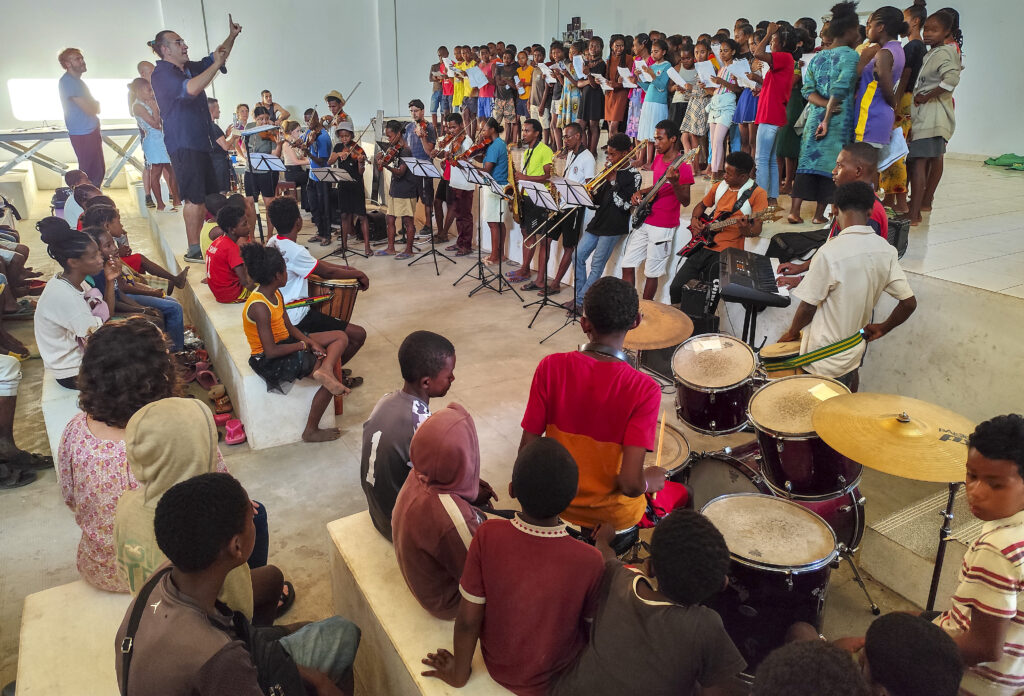
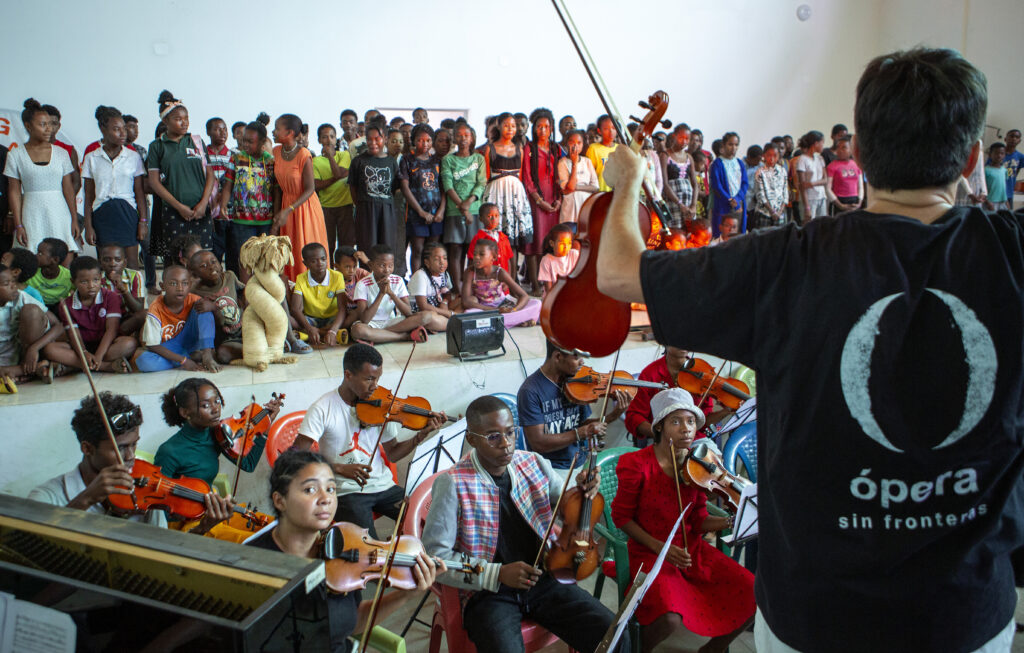
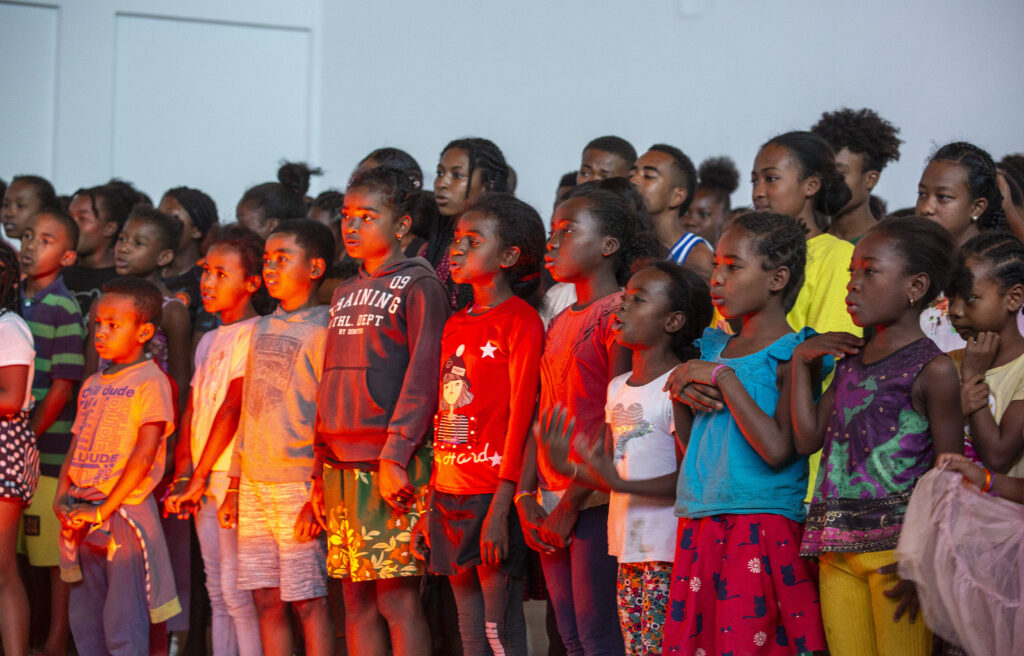
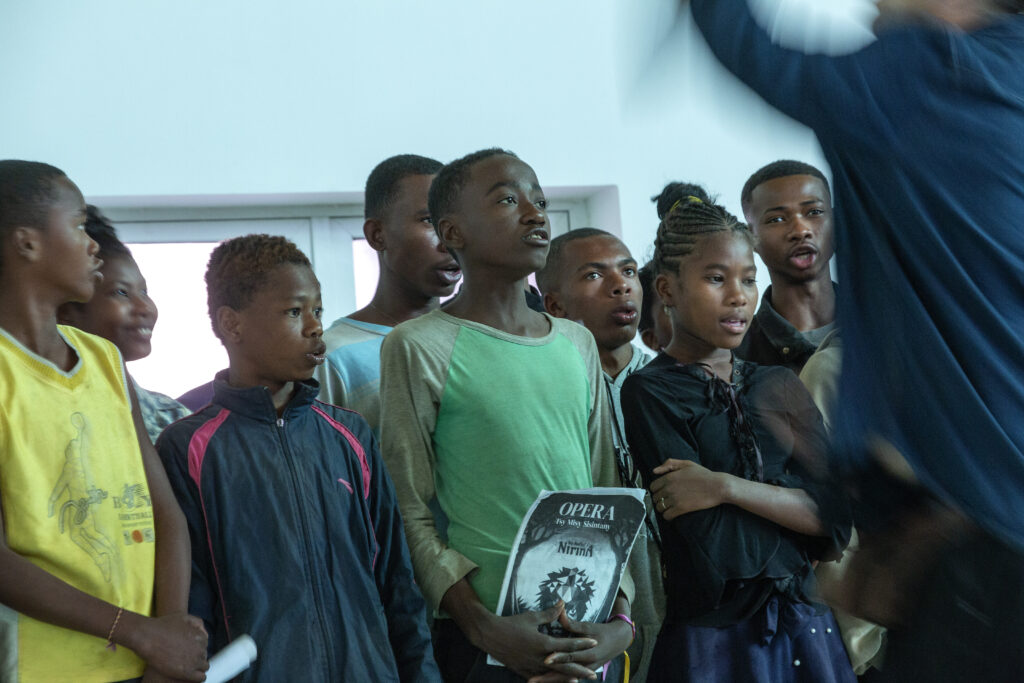
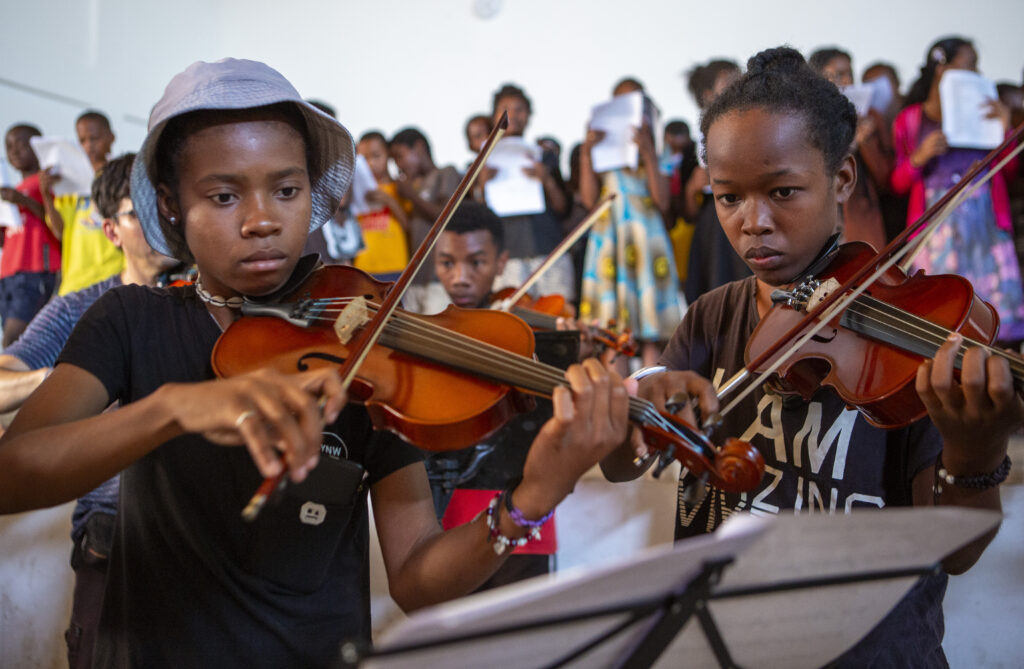
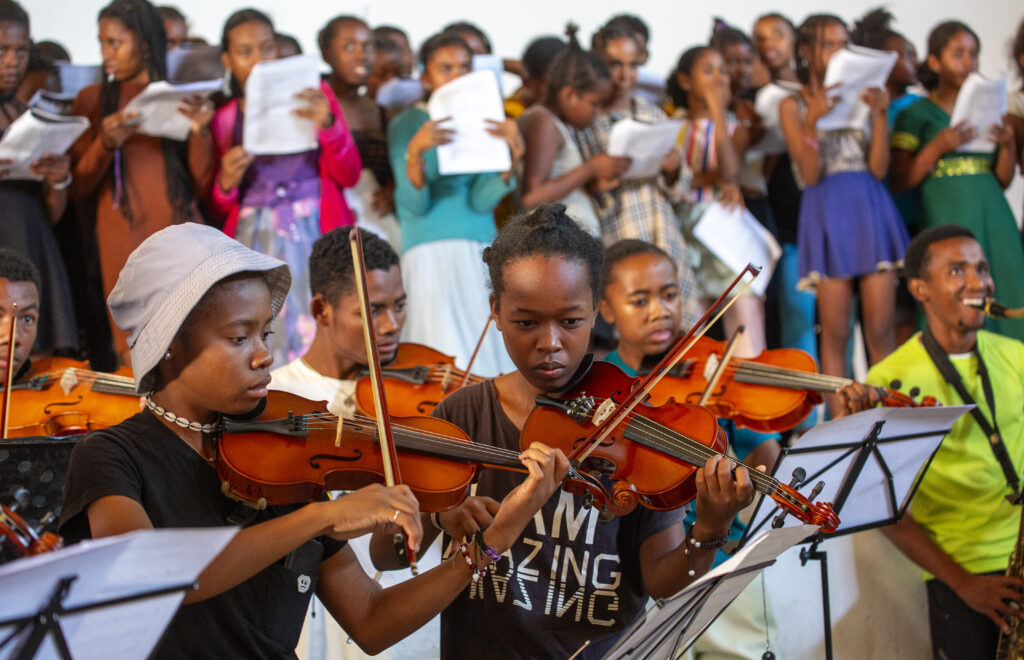
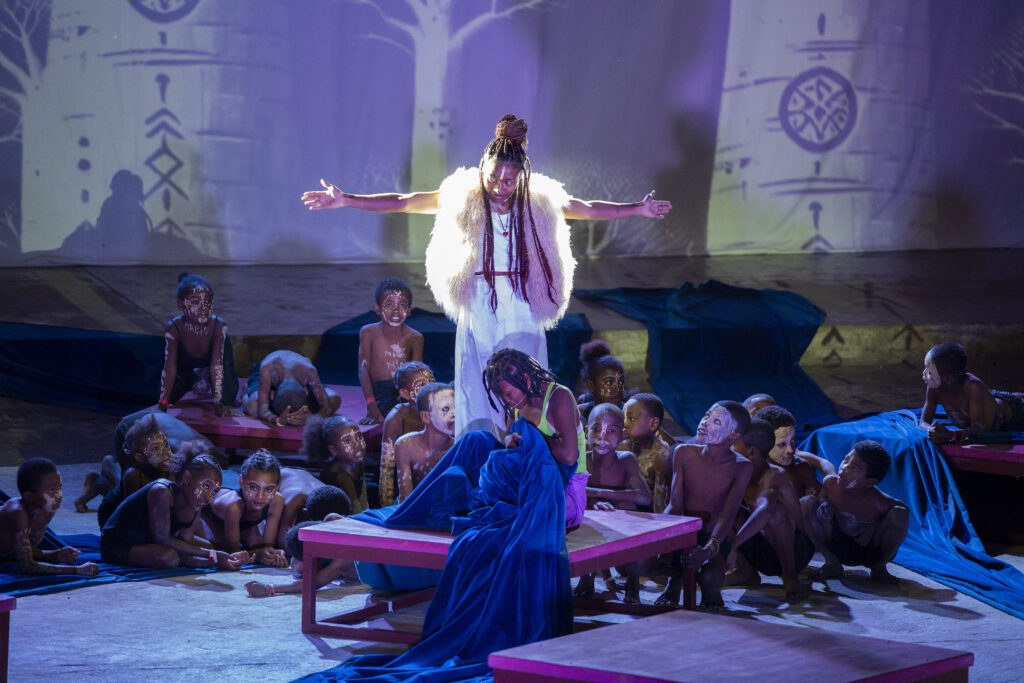
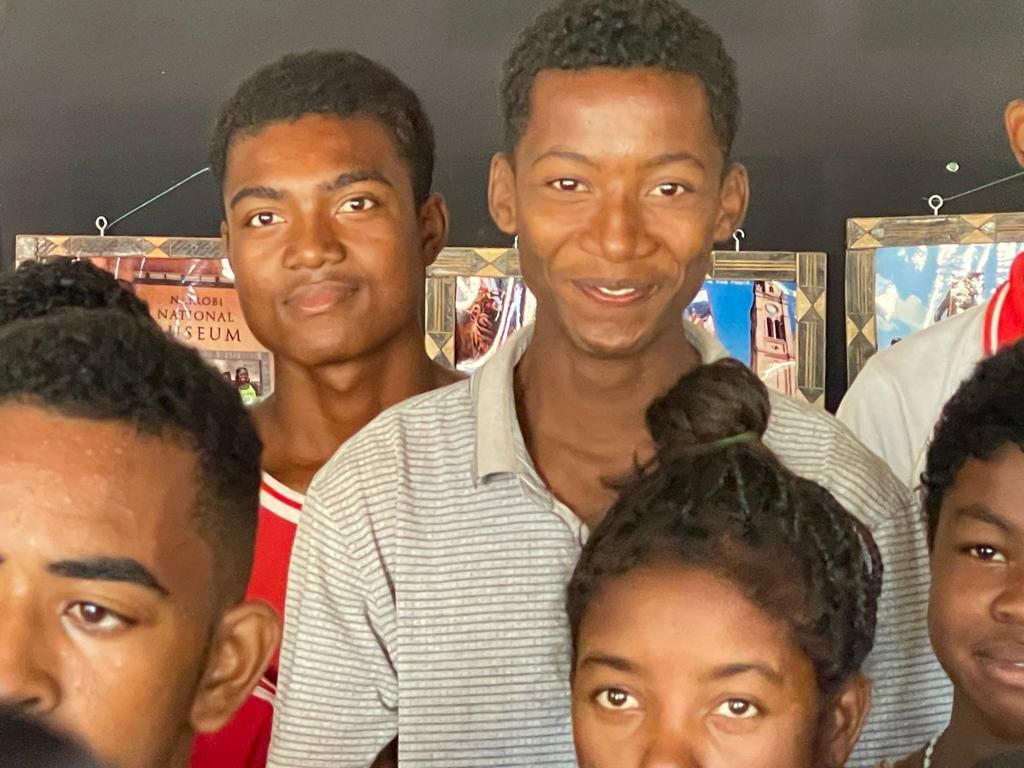
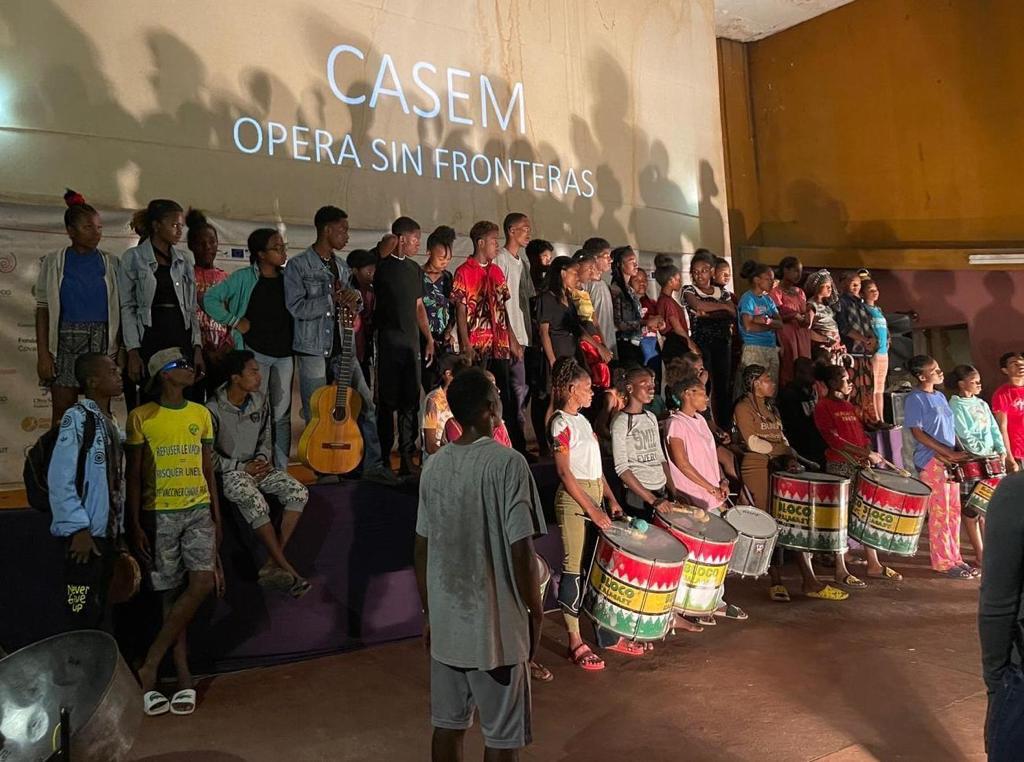
On September 6, 2024, in Toliara (Madagascar), the world premiere of the first contemporary opera in the Malagasy language took place. Over 200 Malagasy children and youth, students from CASEM, collaborated with a top-tier team of Spanish performing arts professionals.
“EL SUEÑO DE NIRINA” is a manifesto in defense of Malagasy women, climate emergency, and education as a driver of development.
2. Goals Achieved
The ÓPERA SIN FRONTERAS team, in collaboration with AGUA DE COCO, succeeded in establishing opera as a tool for transformation, breaking away from its elitist perception. They also managed to reach those neglected by the system, creating emergency culture and recognizing the genius of Malagasy culture.
3.The Beneficiaries
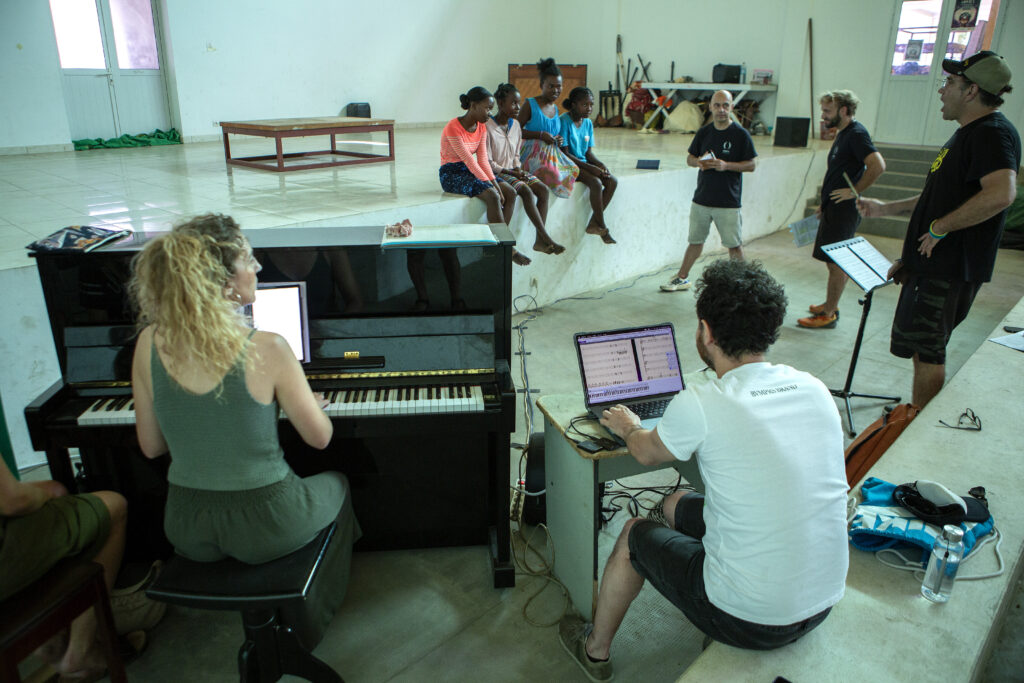
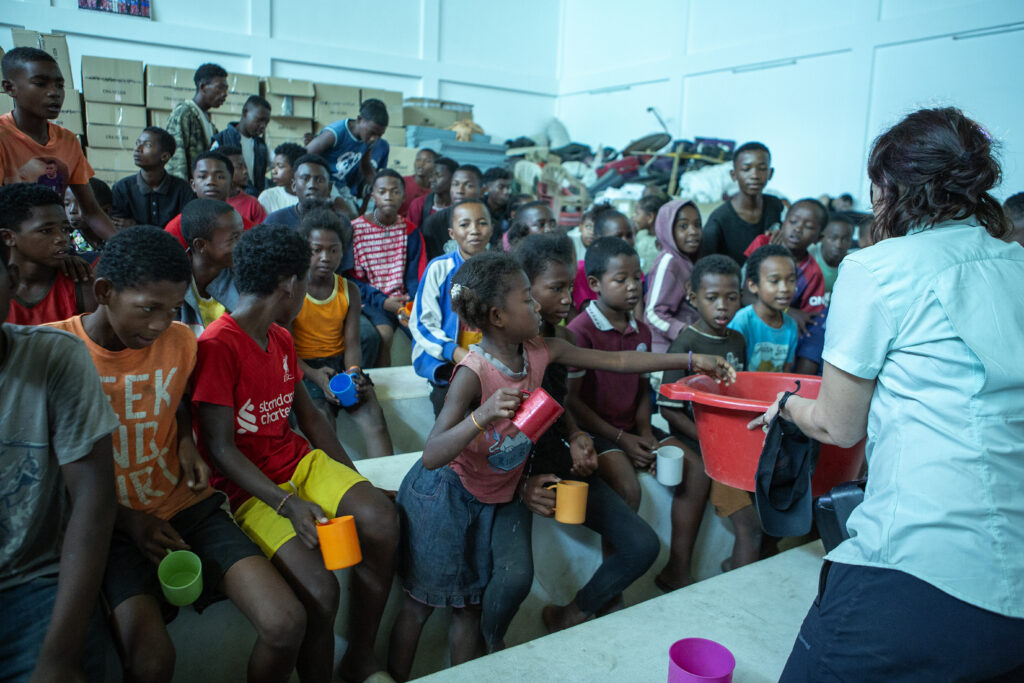
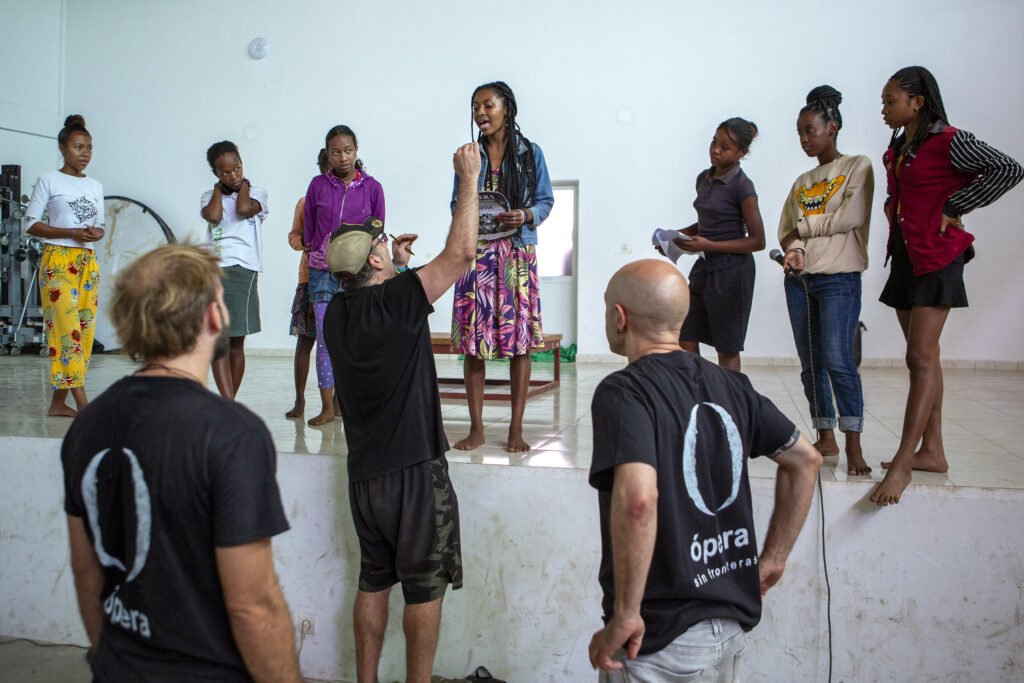
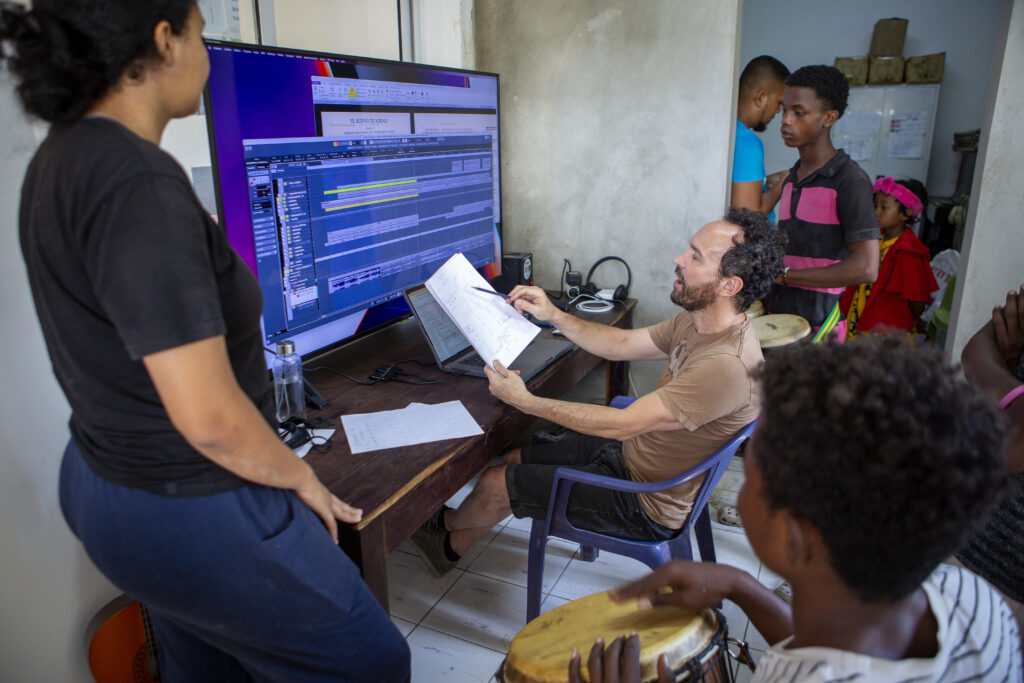
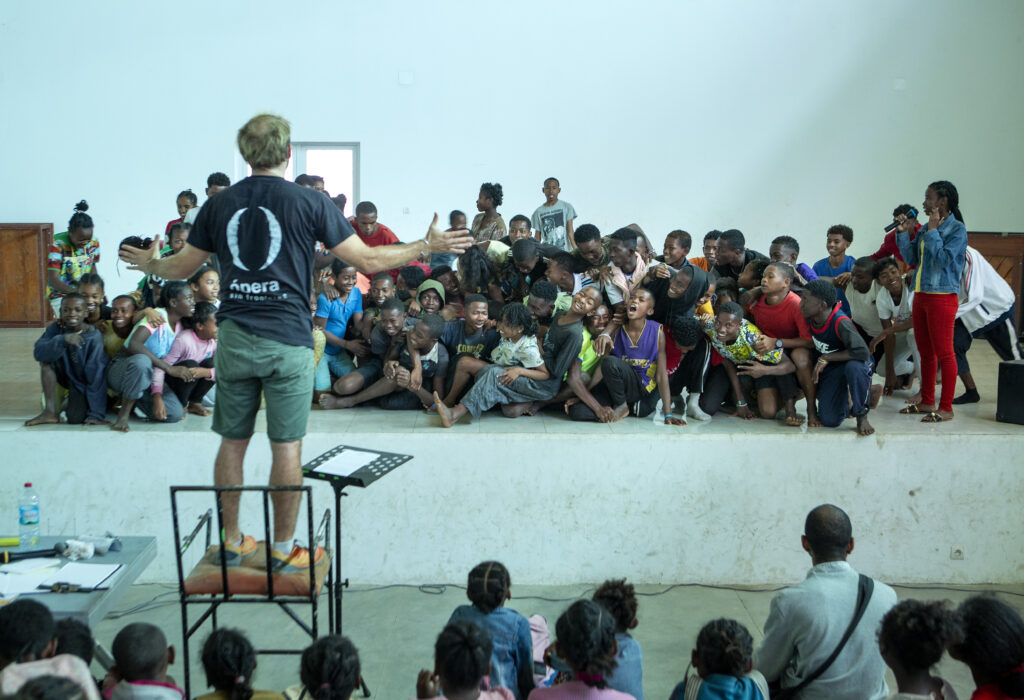
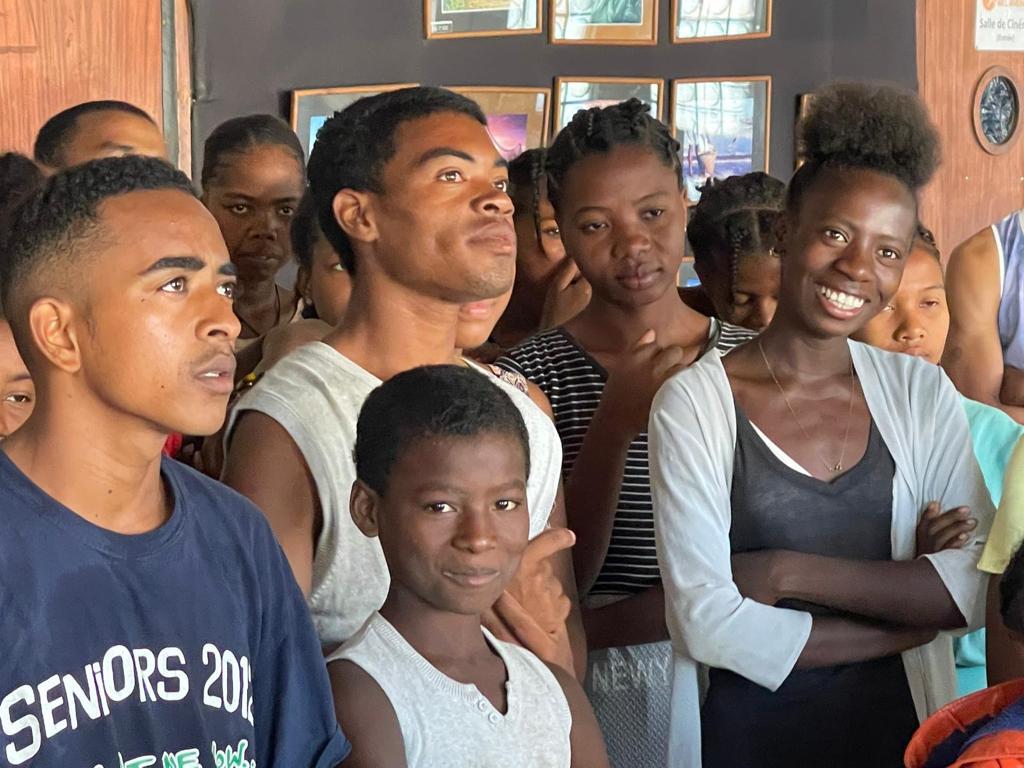
More than 200 children and young people participated in the opera—students from CASEM—at risk of social exclusion and coming from contexts of extreme poverty. Among them were girls under 15 who had been involved in prostitution since the age of 8, as well as youth from other BEL AVENIR social projects. All of them took part in training activities in music, theater, costume design, set design, makeup, and more.
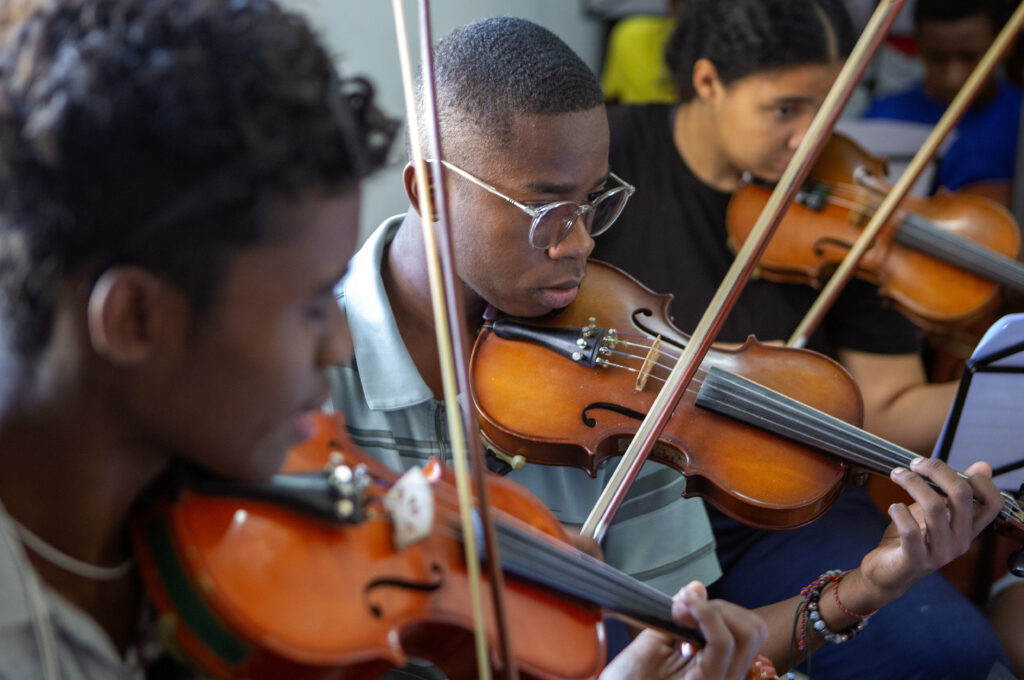
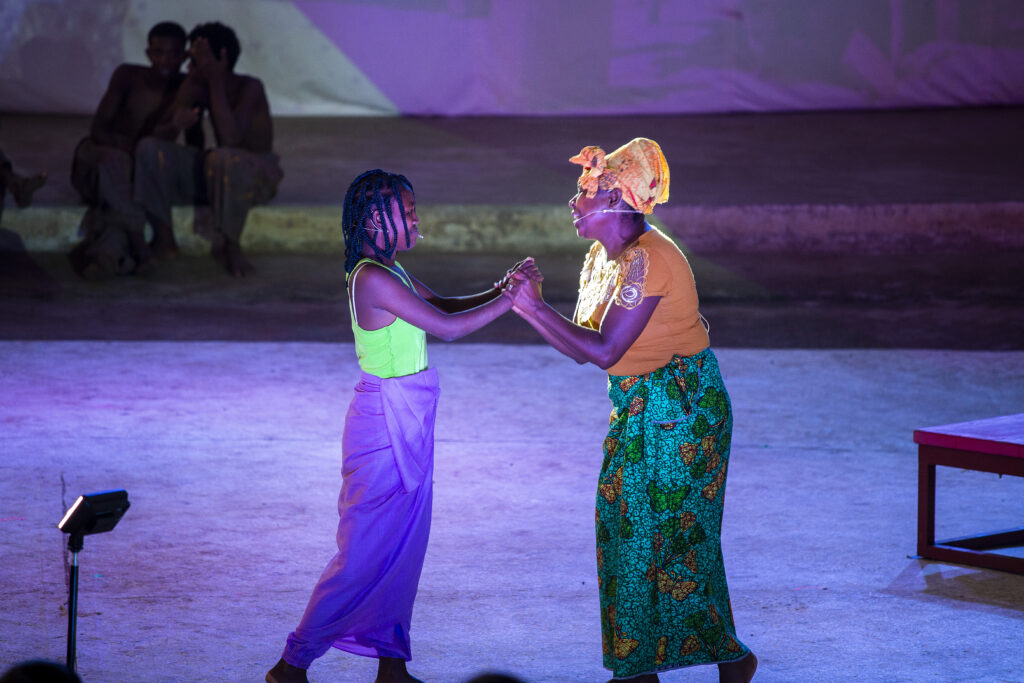
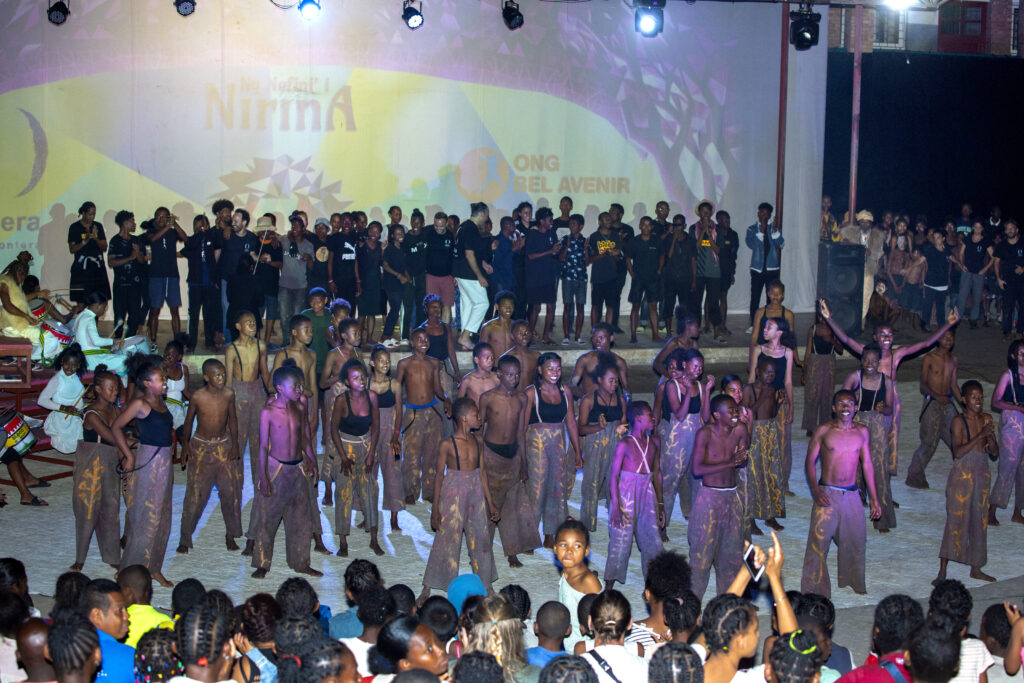
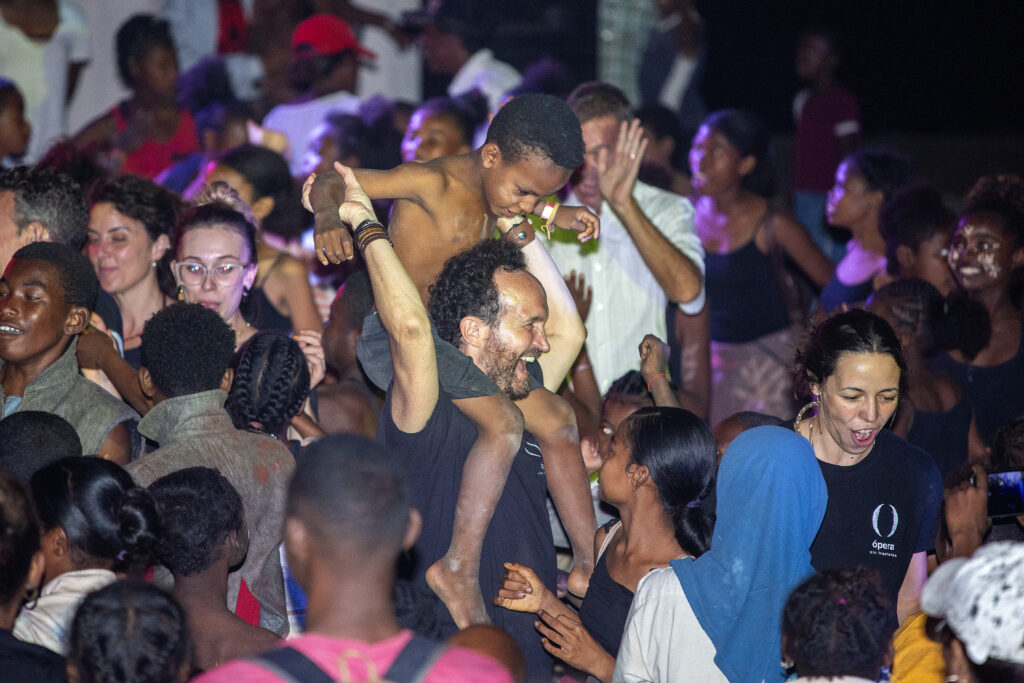
4. The Performance and the Audience
The premiere took place at the Don Bosco Oratory, located in one of the most disadvantaged neighborhoods of the city. Admission was free to ensure that the opera reached all segments of society, regardless of their economic status.
In collaboration with the Toliara prison, we were able to invite the women’s ward of the penitentiary to the premiere. The inmates were able to enjoy access to culture like any other citizen and receive the opera’s transformative message.
For three days, audiences of all kinds, backgrounds, ages, and social classes attended a theatrical event never before seen in the city.
The process will be carried out in two phases.
PHASE 0 JUNE 2023 IDENTIFICATION
– Completed -
OPERATIONAL OBJECTIVES OF PHASE 0
1. Understanding the culture and social reality of the beneficiaries: the Malagasy people.
One of the aims of ÓPERA SIN FRONTERAS is to give voice to the unique identity of the Malagasy community. Our project seeks to raise awareness and highlight the richness of its traditions, legends, beliefs, and customs passed down through generations, as well as their current relevance.
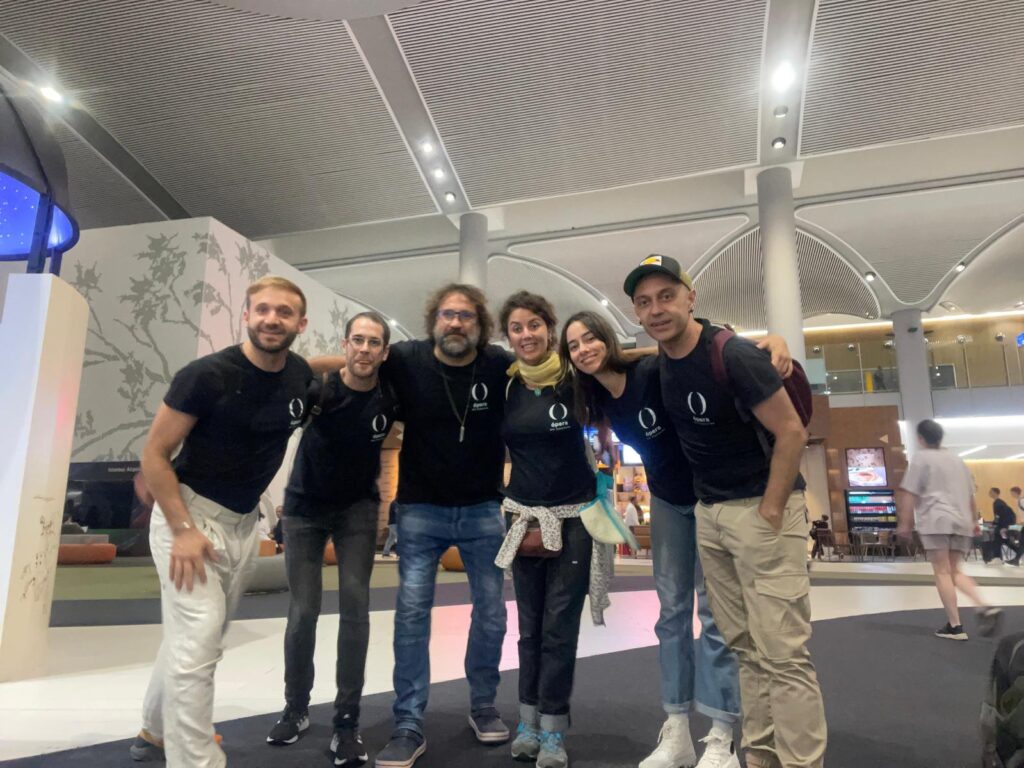
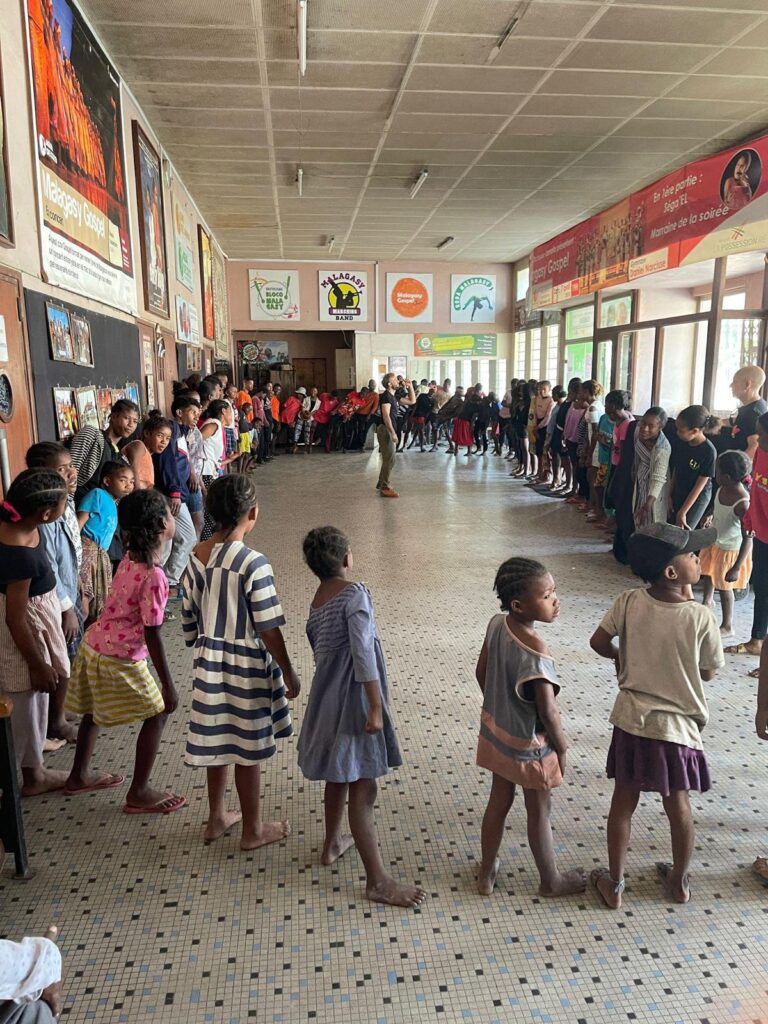
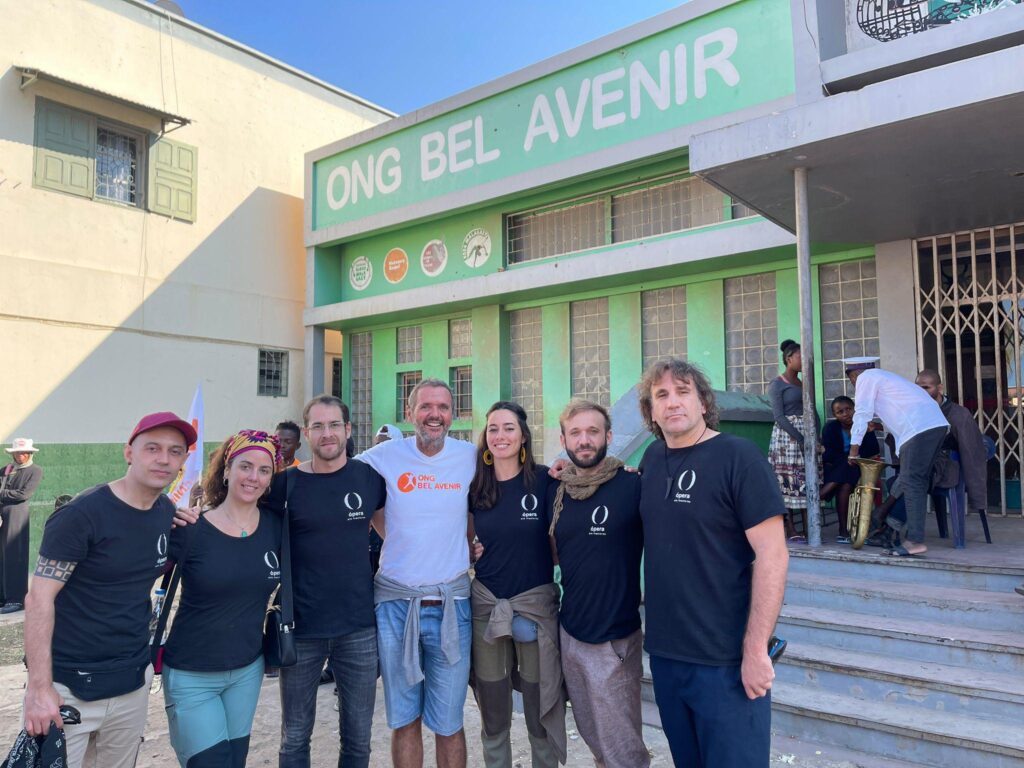
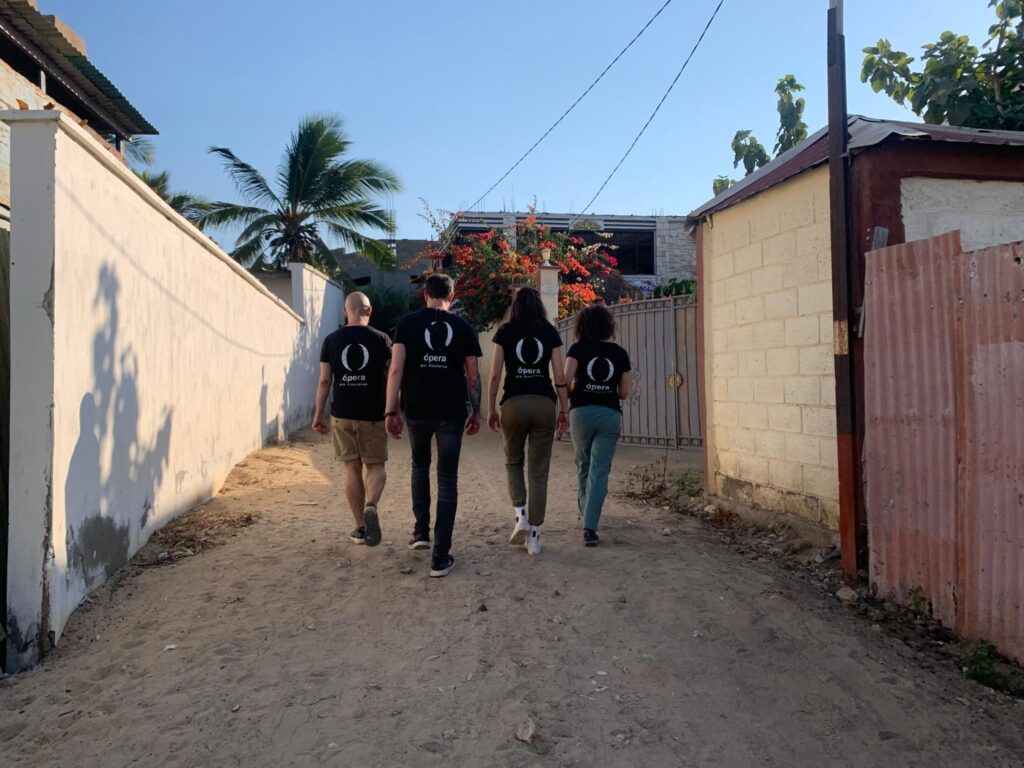
To better understand the Malagasy socio-cultural reality, we spent 14 days in the Toliara region, where, in addition to working at CASEM, we visited various Agua de Coco projects and the local prison.
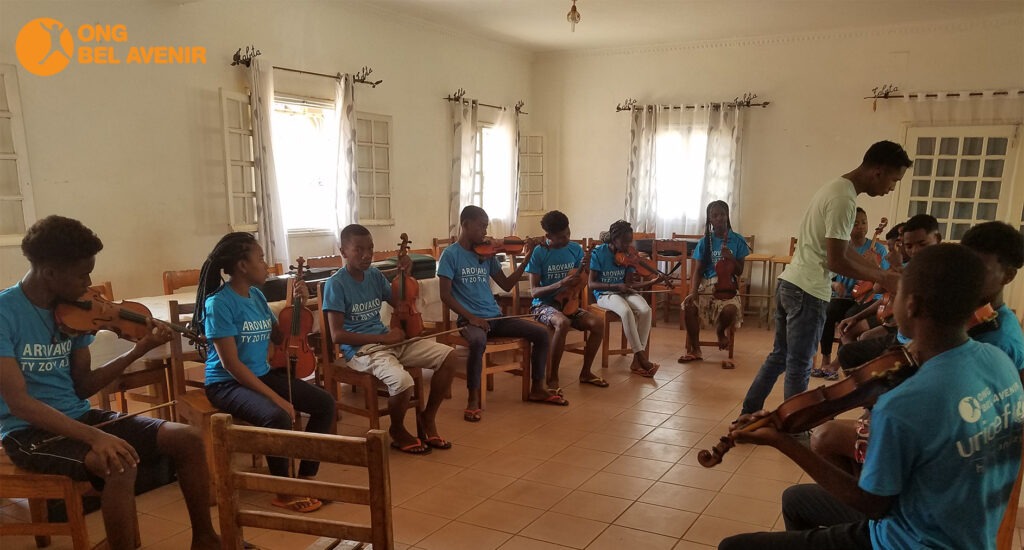
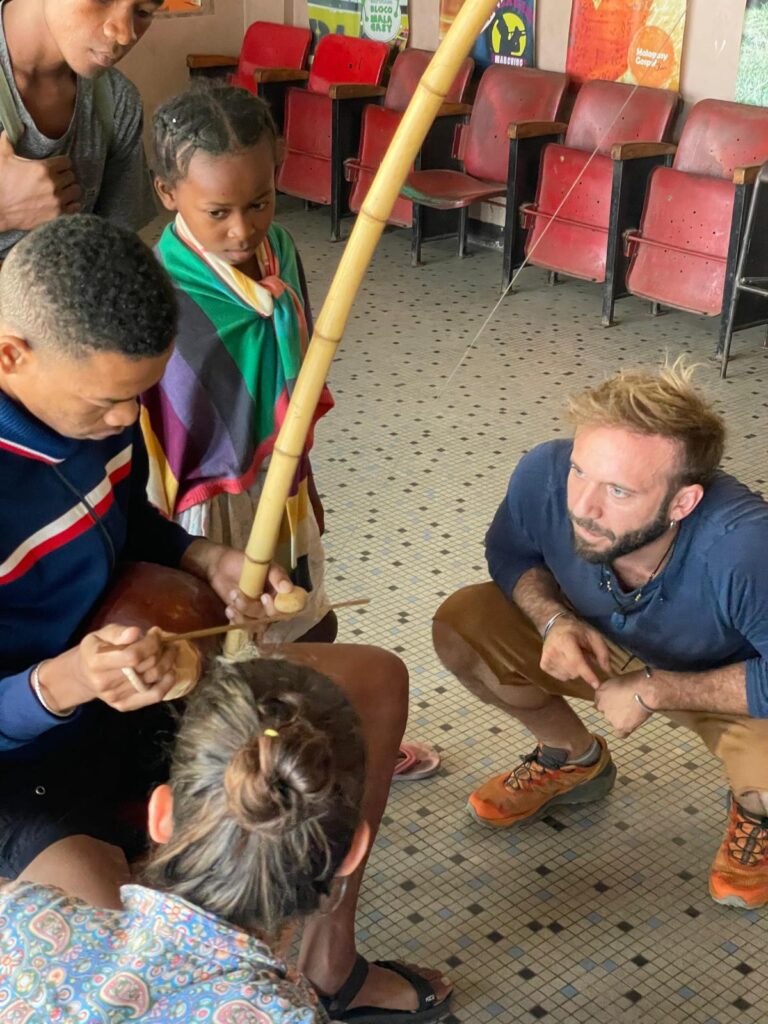
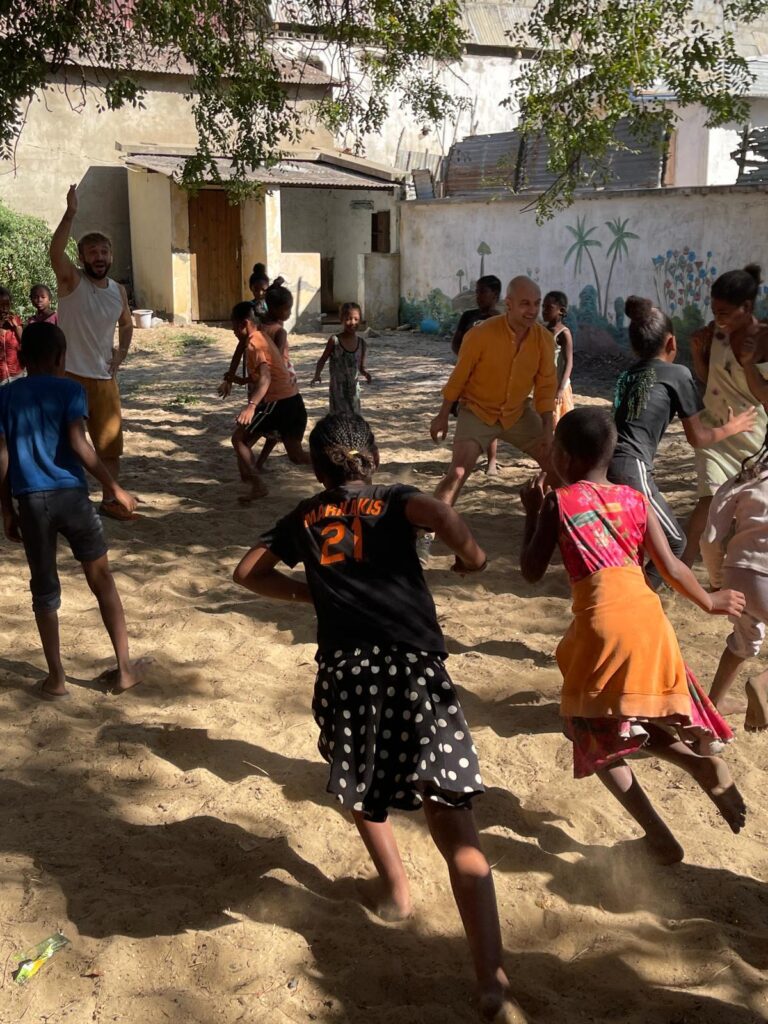
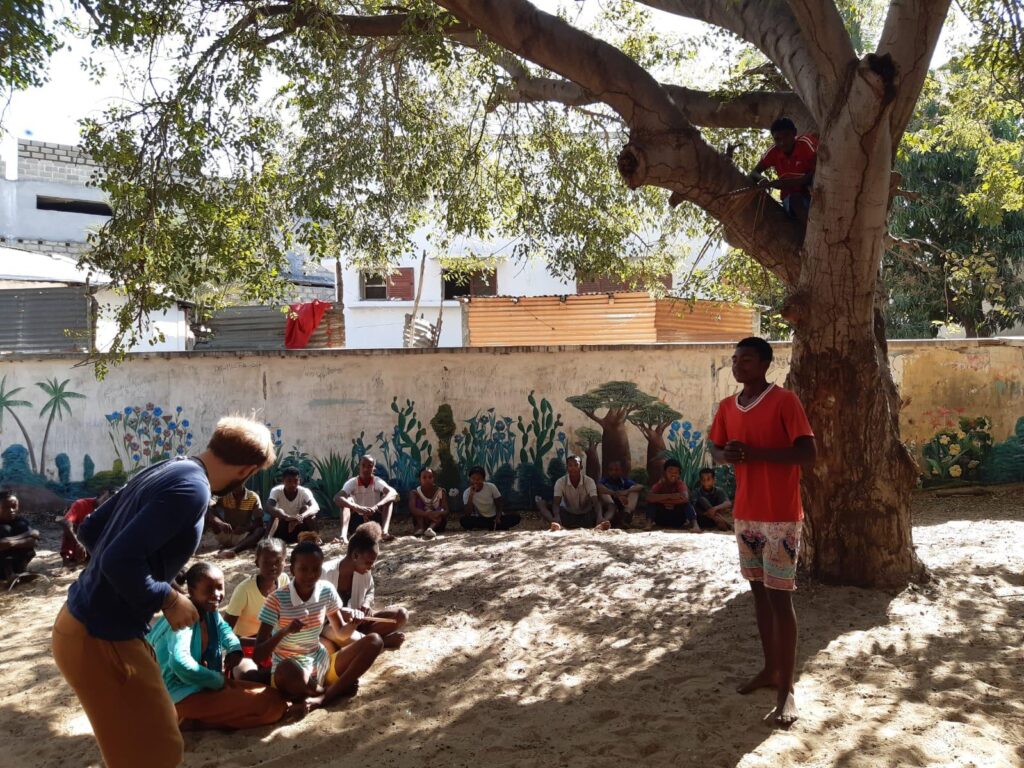
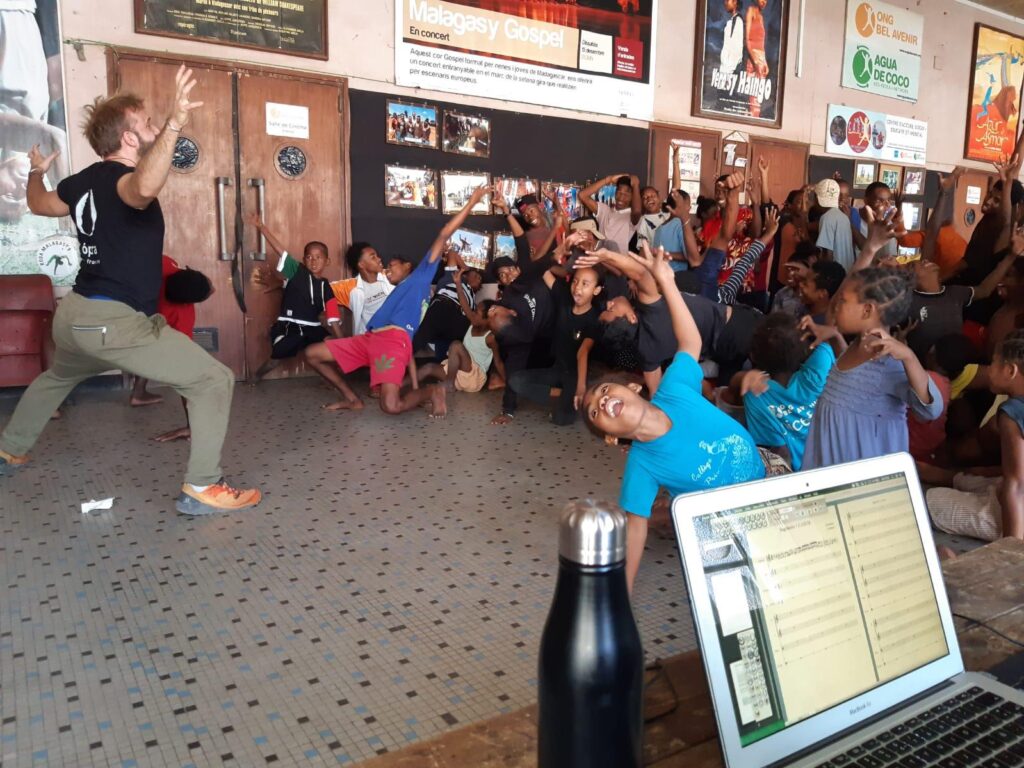
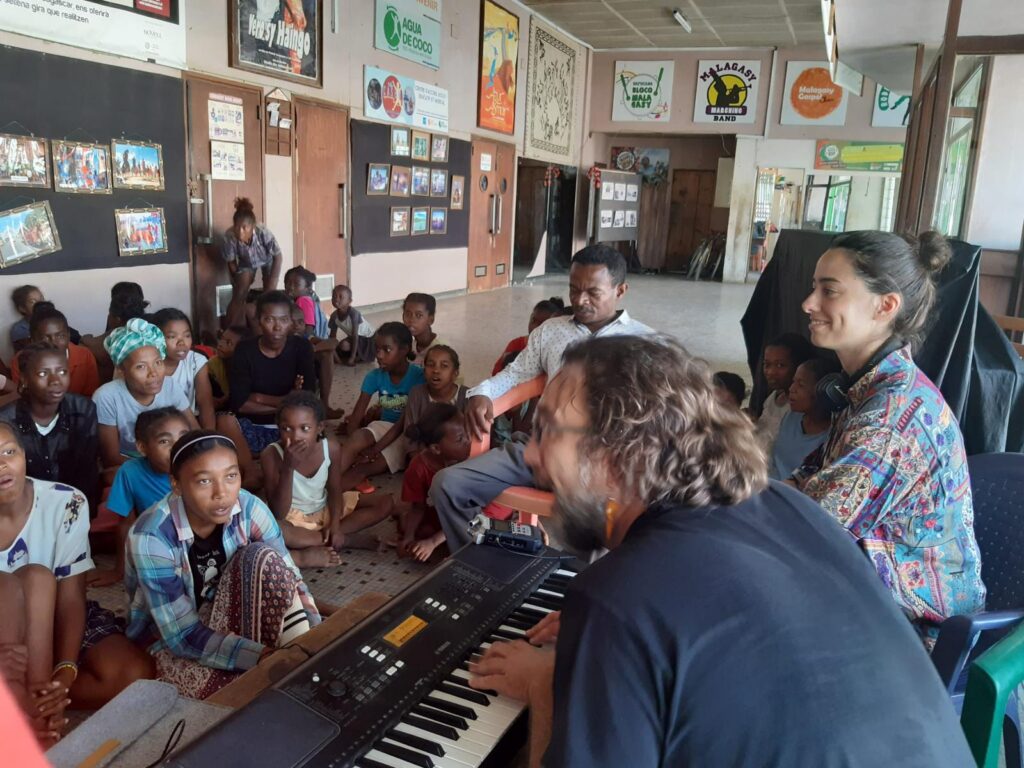
2. To conduct theater and music workshops in order to understand the artistic abilities of the participants and learn from their forms of artistic expression.
The teaching approach and learning dynamics at CASEM are unique. Student attendance fluctuated constantly, and the wide range of knowledge and skill levels made improvisation the driving force behind the practice.
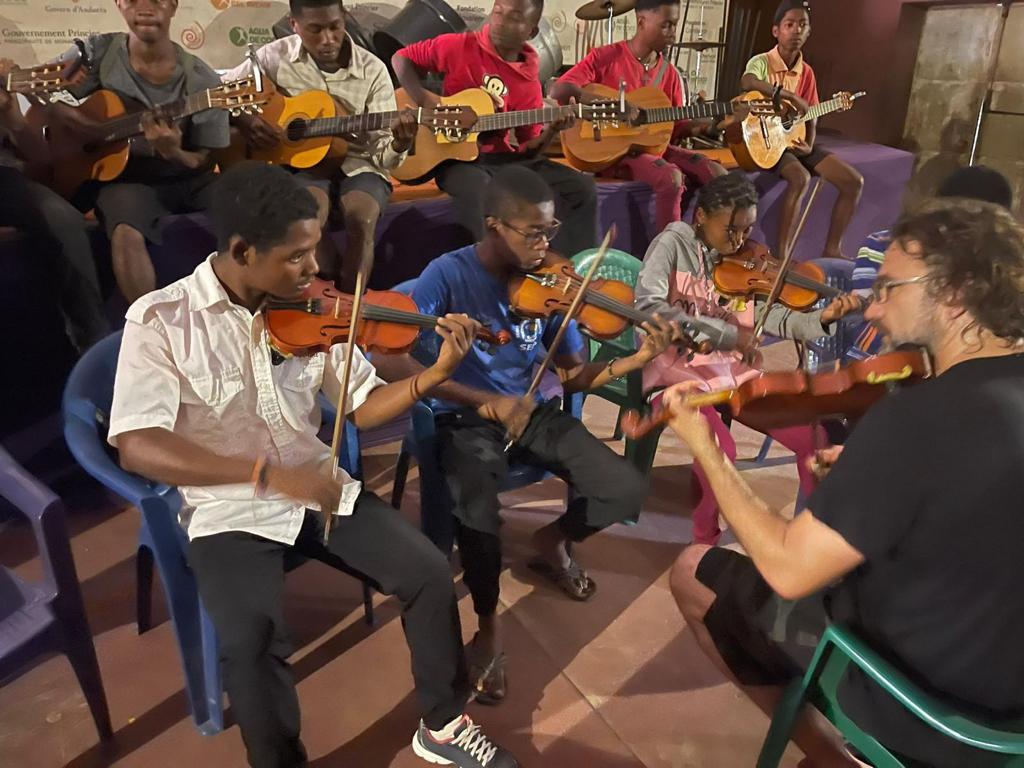
Through group dynamics, participants were guided in discovering, developing, and expanding their skills in expression and stage performance. As a result, the beneficiaries gained an initial understanding of what a theatrical experience entails—a first introduction to the theatrical side of opera.
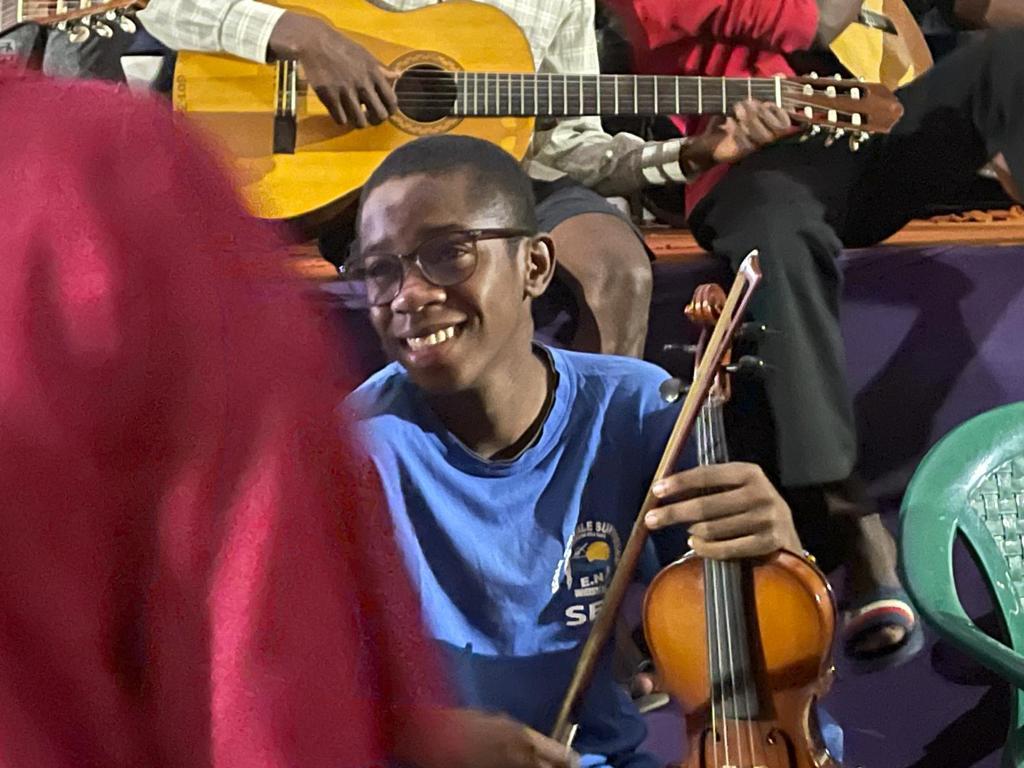
Additionally, thanks to the proposed exercises, they learned how to set texts to music, distinguish between different harmonic modes, and bring instruments together under a common code with a shared goal: collective artistic practice.
3. Understanding and assimilating the functioning of CASEM
We had the immense pleasure and honor of participating in the daily activities at CASEM. We observed that, according to the objectives set for this phase, in order to carry out the performance, it is currently necessary to direct all of CASEM’s resources toward the challenge ahead of us:
Creating together the first opera in Madagascar—feminist and environmentalist.
4. Determining the location for the opera's performance and rehearsals
We visited several available spaces (Cinéma Tropique, Bel Avenir sports courts, indoor multipurpose pavilion, football stadium) to assess their suitability for hosting the opera’s artistic and technical teams and cast. We evaluated each site in terms of location, existing equipment, and any adjustments that might be needed to prepare the venue.
5. Engaging with the existing cultural, artisanal, and professional network to establish collaborations for Phase 1
This objective was not fully achieved, beyond some informal contacts with artisans, fabric shops, etc. The intensive work carried out at CASEM made it impossible for the production team to complete this task. However, CASEM assured us that they have connections with the necessary trades.
6. Documenting the entire process
With the aim of being accountable to partners and institutions, and to generate material useful for writing the libretto and composing the opera, we visually documented the entire process of our stay in Toliara. Hours of video footage were recorded and thousands of photographs were taken. These will also form part of a short audiovisual documentary to help both organizations raise funds for the project.
MADAGASIKARA
Our first project, Madagasikara, will be carried out in partnership with Agua de Coco, to bring opera to Madagascar.
Agua de Coco is a foundation that has been dedicated to international cooperation, awareness-raising, and development education since 1994. It works to improve the quality of life for people at risk of social exclusion, with a special focus on women and children, using education as a driving force for the development of communities.